On a high-end project, cabinetry is one of the few elements that is both highly visible and completely unforgiving. A countertop can be swapped, paint can be redone, but cabinets are built once, to exact dimensions, and installed into a space that has to receive them perfectly. That is why the cabinet shop a designer or contractor chooses to work with matters so much. The right partner protects the design intent, keeps the build on schedule, and makes the professional who hired them look good to the client.
At ATA Custom Cabinets, much of our work comes through interior designers and general contractors across Los Angeles. Over years of those collaborations we have learned what each one needs from a cabinet shop, and how to deliver it without friction. This is a look at how that partnership actually works, from the first set of drawings to the finished install, and what designers and GCs can expect when they bring a project to a full custom shop.
One Partner, Two Sets of Priorities
Designers and contractors come to the same shop, but they are usually solving for different things.
A designer is protecting a vision. They have sold the client on a specific look, a set of finishes, a feeling for the space. What they need from a cabinet shop is fidelity to that vision, the ability to execute exact specifications, and confidence that the finished cabinetry will match what they presented. They also need a shop that can speak the language of materials and detailing without being walked through every step.
A general contractor is protecting a schedule and a budget. They are coordinating trades, sequencing work, and answering to the client for the whole project. What they need from a cabinet shop is reliable lead times, accurate measurements that do not create rework, and cabinetry that arrives ready to install when the site is ready to receive it.
A custom shop that understands both perspectives becomes easy to build with. We treat the designer as the keeper of the vision and the contractor as the keeper of the timeline, and we make sure our process serves both at once. That is the difference between a vendor and a partner, and it is why so much of our work in Encino, Sherman Oaks, Studio City, and Calabasas comes from repeat designer and GC relationships rather than one-off jobs.
It Starts With Shop Drawings and CAD
The single most important step in a smooth collaboration happens before anything is manufactured. Every project begins with detailed shop drawings produced in CAD, and nothing gets cut until those drawings are approved.
For a designer, the shop drawings are where the vision gets confirmed in precise terms. Door styles, whether slab, shaker, or slim shaker, are drawn exactly. Material callouts, finish selections, reveal lines, hardware locations, and interior configurations are all documented. The designer reviews the drawings against their own plans and signs off, which means there are no surprises when the cabinetry shows up. What was specified is what gets built.
For a contractor, those same drawings are a build document. They show real dimensions, clearances, and how the cabinetry interfaces with walls, appliances, plumbing, and electrical. The GC can coordinate other trades around an accurate set of drawings instead of guessing. When everyone is working from the same approved CAD set, the project stays aligned and the expensive late-stage conflicts simply do not happen.
This drawing-first approach is also where a lot of value gets created quietly. Reviewing detailed drawings often surfaces a clash or an opportunity that no one caught in the original plan, and catching it on paper costs nothing compared to catching it after fabrication.
Field Measure Before Fabrication
Drawings are only as good as the dimensions behind them, which is why we field measure before anything is built. A member of our team verifies the actual conditions of the space, walls, openings, floors, and ceilings, and confirms that the drawings match reality.
This step protects everyone in the relationship. Designers do not have to worry that a beautiful design will not physically fit. Contractors do not get stuck absorbing the cost and the schedule hit of cabinets that were built to a plan dimension that did not match the framed wall. In renovation work especially, common across older homes in Tarzana, Woodland Hills, and the wider San Fernando Valley, walls are rarely perfectly square, and a real site measurement is the only way to guarantee a clean fit.
Custom cabinetry is built to the millimeter. That precision is an advantage only when the measurements feeding it are correct, and verifying them in the field is how we make sure the precision works for the project rather than against it.
CNC Manufacturing and a Detail-Oriented Shop
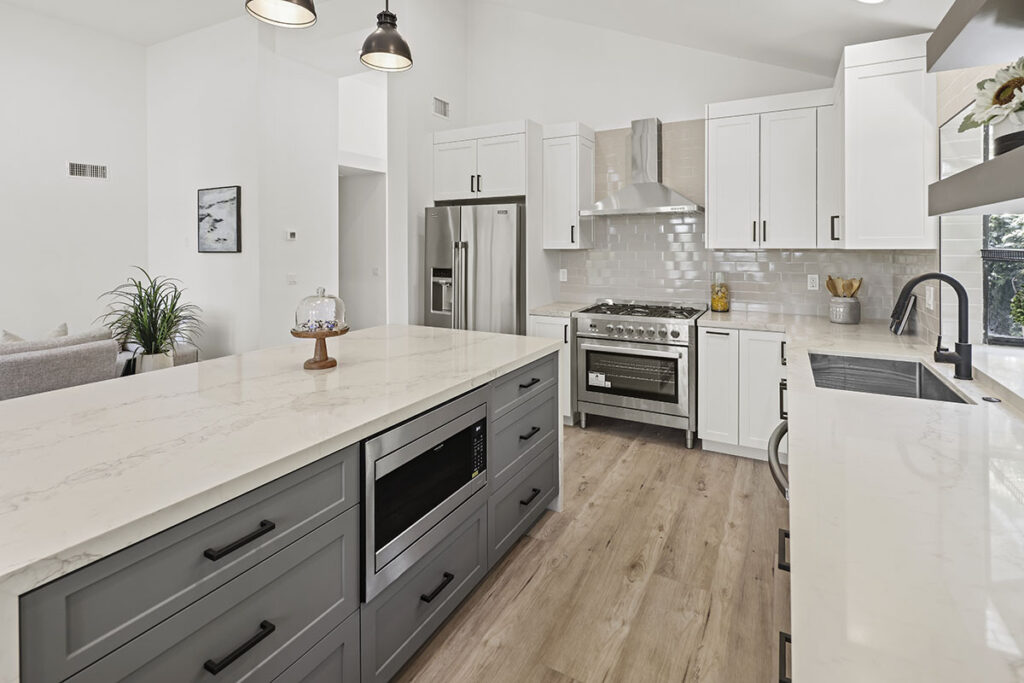
Once drawings are approved and dimensions are confirmed, the work moves into our shop, where everything is manufactured in-house on CNC equipment. We do full custom only, no stock and no semi-custom, which means every cabinet is made to the exact specifications of the project rather than adapted from a fixed catalog.
CNC manufacturing matters to designers and contractors for a few concrete reasons. It delivers consistency, so a long run of cabinetry reads as one cohesive piece with matched grain and tight, repeatable joinery. It delivers true custom sizing, so cabinetry fits the space instead of forcing the space to accommodate standard boxes. And it delivers accuracy that holds from the first cabinet to the last, which is what makes installation predictable.
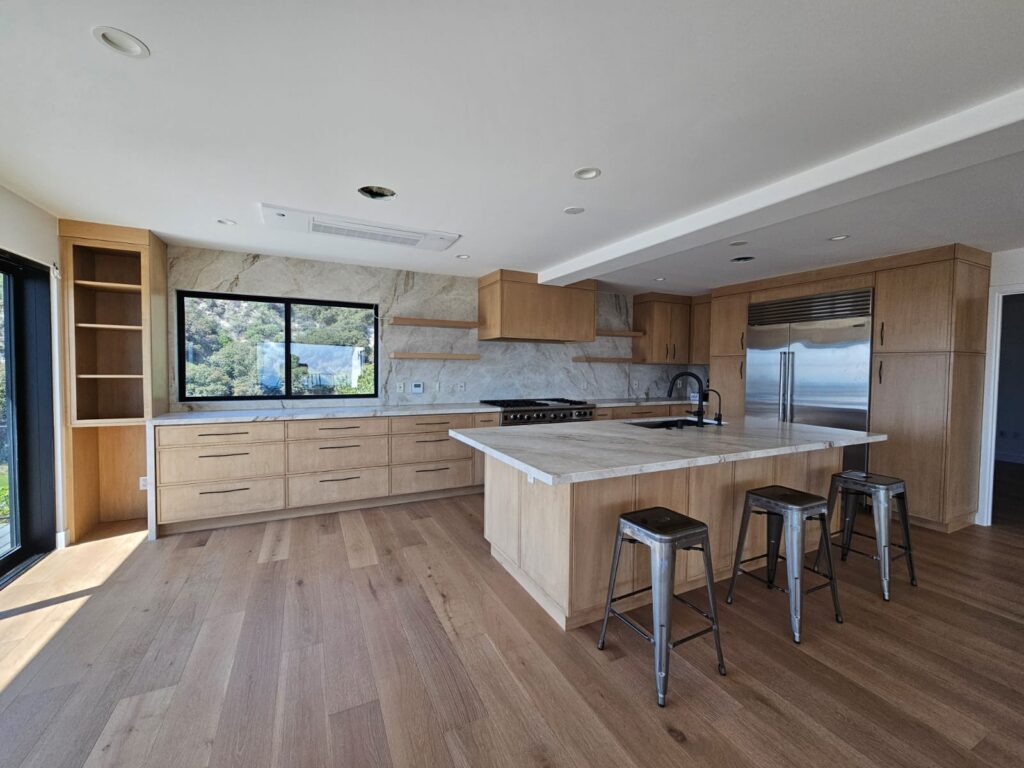
The detail orientation goes beyond the machines. We work in the wood species designers actually specify, including white oak, walnut, and maple, and with finish and surface materials from makers such as Egger, Shinoki, Treefrog, Fenix, Miralux, and Wilsonart. Whether the project calls for a clean European frameless kitchen, a painted shaker built-in, or a walnut entertainment center, the level of care in finishing and assembly is where a full custom shop earns its place on the team. Those are the details a client notices without knowing why, and they are the details that make a designer or GC want to come back.
What Designers and GCs Can Expect Working With Us
Beyond the process, a good partnership comes down to how a shop communicates. When you bring a project to ATA, you get a clear point of contact rather than a runaround, drawings turned around so the project keeps moving, and honest lead times rather than optimistic ones that slip. We would rather give a realistic production schedule and hit it than promise a date we cannot hold, because a missed cabinet date throws off every trade behind it.
On pricing, we work with trade clients on a project-by-project basis. We do not run a fixed discount program, but we understand that designers and contractors are building an ongoing book of business, and we approach repeat relationships accordingly. The goal is to be a shop you can specify with confidence and quote against predictably.
For larger homes across Beverly Hills, Bel Air, Brentwood, Malibu, and Pacific Palisades, where the cabinetry package can run across an entire residence, that reliability is the whole game. A designer or GC working on a project of that scale cannot afford a cabinet partner who is hard to reach or loose with a schedule, and we have built our process specifically to remove that risk.
Frequently Asked Questions
Do you build from a designer’s existing specifications and drawings?
Yes. We regularly work from a designer’s plans, specifications, and finish selections, then translate them into detailed shop drawings for approval before fabrication. The designer stays in control of the vision and signs off on the drawings before anything is cut.
Do you provide shop drawings for the contractor to build around?
Yes. Every project includes detailed CAD shop drawings with real dimensions and clearances, so the general contractor can coordinate framing, plumbing, electrical, and other trades around an accurate document.
How do you coordinate with our construction schedule?
We field measure once site conditions are ready, then give a realistic production lead time so cabinetry is manufactured and delivered to align with the build sequence. Clear scheduling and honest timelines are part of how we keep the project on track.
Do you offer trade pricing for designers and contractors?
We work with trade clients on a project-by-project basis. There is no fixed discount program, but we value ongoing designer and contractor relationships and quote repeat work accordingly.
What types of projects do you take on for the trade?
Full custom residential cabinetry of all kinds, including kitchens, bathroom vanities, closets, laundry rooms, garage cabinets, built-ins, and entertainment centers, plus commercial millwork and casework for office, medical, dental, and tenant improvement projects.
Where do you work?
We are based in the San Fernando Valley and serve interior designers and general contractors throughout Los Angeles, including Tarzana, Woodland Hills, Encino, Sherman Oaks, Studio City, and Calabasas.
Build Your Next Project With a Shop That Makes It Easy
The strongest cabinet partnerships are the ones the client never has to think about, because the drawings were right, the measurements held, and the cabinetry arrived ready to install. That is what we build our process around for the designers and contractors we work with.
If you have a project in design or in the field, reach out to start it with us or to request shop drawings, and see our completed work at atacabinets.com.
Call us at (818) 346-2030 to talk through your project and how we can fit into your design and build schedule.