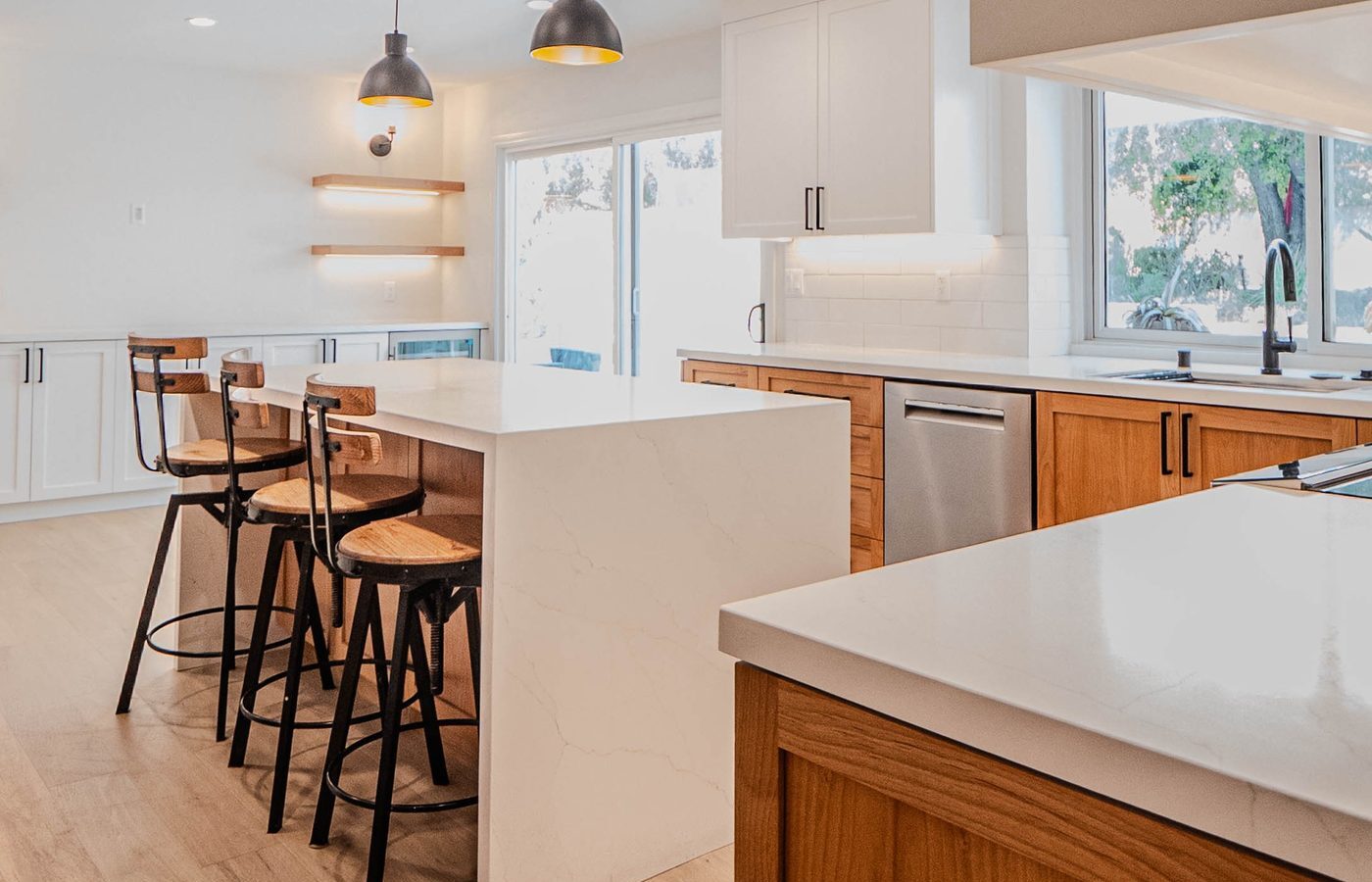
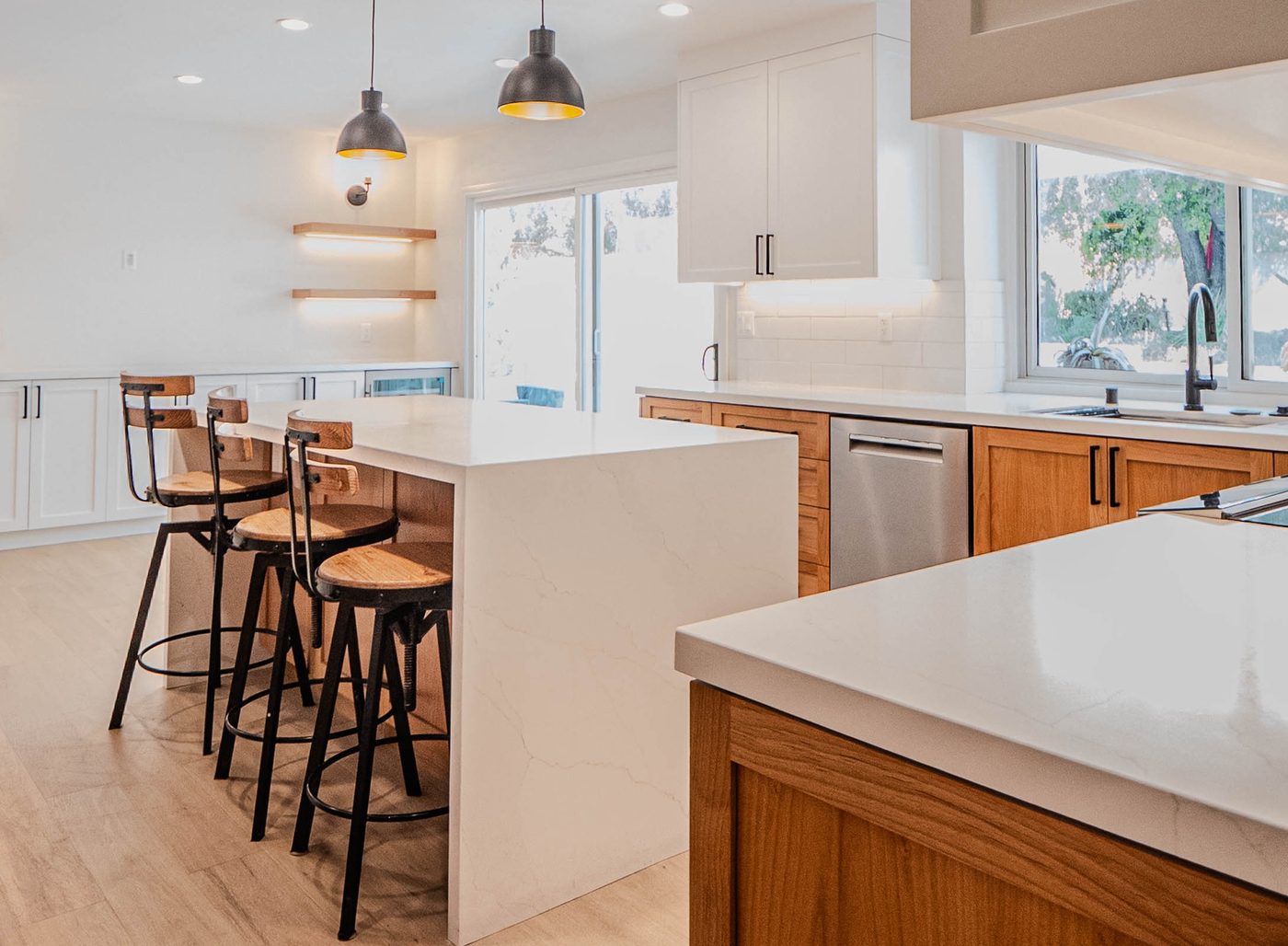
There is a look that keeps showing up in high-end Los Angeles kitchens, and it is not accidental. Clean horizontal lines, no visible frame around the door openings, hardware that sits flush against a smooth face. It is the look homeowners pull up on their phones when they walk into our Canoga Park showroom and say, “I want something like this.” What they are describing, often without knowing the name, is European frameless cabinetry.
Frameless construction has been the standard in European kitchen design for decades. It arrived in American luxury markets through high-end showrooms and editorial kitchen features, and it has since become one of the most requested styles among the interior designers, general contractors, and remodeling homeowners we work with across the San Fernando Valley and the Westside. This guide breaks down what frameless cabinets actually are, why they work so well in contemporary and transitional LA homes, how ATA Custom Cabinets builds them from scratch in our Canoga Park shop, and what to know before you commit to the style for your remodel.
What Are European Frameless Cabinets?
Frameless vs. Face-Frame: The Core Difference
Traditional American cabinets are built around a face frame, a rectangular border of solid wood that gets attached to the front of the cabinet box. Doors and drawers mount onto or inside that frame. It is a durable, familiar system that has dominated domestic cabinetry for generations, and it still makes sense in a lot of applications.
In frameless construction, there is no face frame. The doors and drawers mount directly to the sides of the cabinet box using concealed hinges. The result is a full-overlay look where the door covers nearly the entire front of the box, leaving only a thin reveal between adjacent doors. That reveal, typically around an eighth of an inch, is what defines the visual cleanness of the style. Less wood on the face means more of the cabinet interior is accessible from the front, and more visual uninterrupted surface on the outside.
Where the “European” Name Comes From
The frameless system was refined and standardized in Germany and Scandinavia after World War II, largely as a response to industrial production methods and a design culture that prioritized function and simplicity. The 32mm system, a hole-drilling grid that allows for modular hardware and shelf pin placement, became the production standard and remains the basis for how modern frameless cabinets are built today. The name European stuck in American markets because for a long time, if you wanted frameless you were often buying imported product. That is no longer the case, especially when you are working with a full custom shop like ours.
Why LA Homeowners Are Choosing Frameless
More Usable Storage in the Same Footprint
Because there is no face frame narrowing the opening, frameless cabinets give you a wider clearance to the interior. On a standard 12-inch-deep upper cabinet, that can translate to an extra inch or more of accessible width per door opening. It sounds small until you try to pull out a wide tray, a stand mixer, or a large pot and realize there is nothing in the way. In a kitchen where every inch of storage is being optimized, that difference matters.
A Cleaner, More Modern Look That Fits LA Design Trends
The design aesthetic in Los Angeles has been moving toward less visual noise for years. Open floor plans, large windows, streamlined millwork. Frameless cabinets fit naturally into that direction. The absence of frame means the cabinetry reads as a single surface, which makes rooms feel larger and more considered. In neighborhoods like Encino, Calabasas, and Woodland Hills where large kitchen renovations are common, we consistently see homeowners and their designers gravitating toward the frameless silhouette as the foundation of the design.
Flexibility Across Styles, From Contemporary to Transitional
Frameless does not mean modern-only. The box construction is the structural system. The visual style is determined by what you put on it. A frameless box with a flat slab door in a matte white finish reads as clean and contemporary. That same box with a slim shaker door in a warm white oak veneer reads as transitional. Frameless cabinetry is a platform, and it is one of the most flexible platforms we work with.
How ATA Builds Frameless Cabinets in Our Canoga Park Shop
From Design and Spec Sheet to the Floor
Every project at ATA starts with a design consultation and a set of detailed drawings. For frameless builds, that spec sheet drives every downstream decision: box dimensions, reveal tolerances, door overlay, hardware spec, and finish selection. Because we manufacture everything in-house, there is no middleman between what is drawn and what gets built. If a kitchen has a non-standard ceiling height or an out-of-plumb wall, we account for it in the design before any material gets cut.
CNC Manufacturing: Explained in Plain English
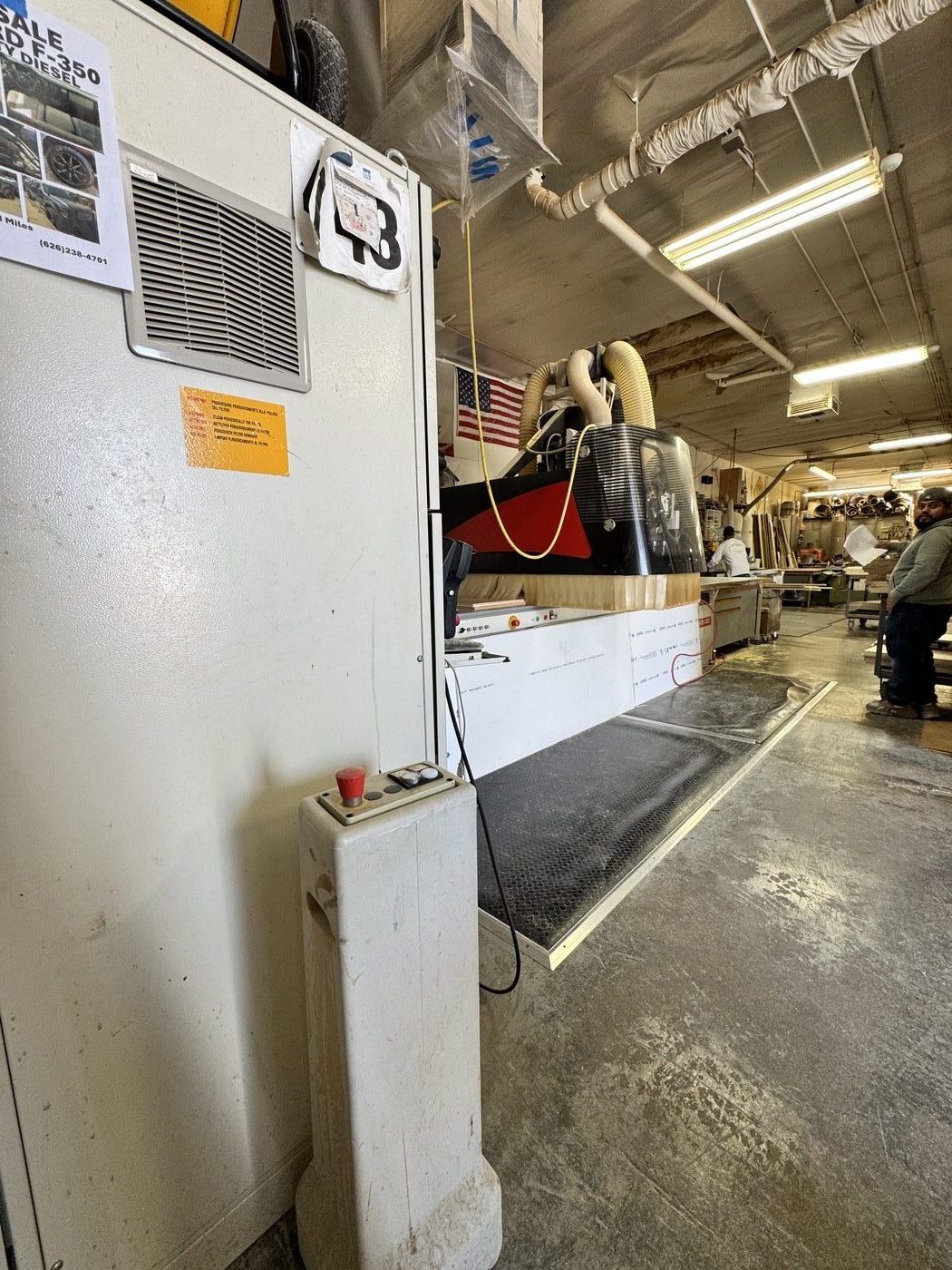
CNC stands for computer numerical control. In practical terms, it means a computer-guided cutting machine is executing the cuts, holes, and dados instead of a person with a hand tool. For frameless cabinets specifically, where reveals and tolerances are measured in fractions of an inch, CNC manufacturing is what makes consistency possible at scale. Every panel comes off the machine at exactly the specified dimension. Every hinge hole is drilled at exactly the right depth and position. That precision is what separates a frameless build that looks intentional from one that looks slightly off, and it is one of the main reasons we invested in CNC production rather than outsourcing parts.
Hardware, Hinges, and the Tight Reveals That Define Quality
The hardware on a frameless cabinet does a lot of work. Concealed hinges have to align perfectly across an entire run of uppers or the visual rhythm breaks. Drawer slides have to be rated for the load and installed level or a heavy pot drawer will sag over time. We use Blum soft-close hinges as our standard on frameless builds, and we spec drawer glides based on the load, depth, and application of each project. Every build gets tested for alignment and operation before it leaves the shop.
Door Styles and Finishes That Pair Well With Frameless
Slab Doors
The slab door, a flat panel with no routed profile or raised center, is the most minimal pairing for frameless construction. It is the choice for homeowners who want the kitchen to feel architectural. We build slab doors in painted finishes, high-gloss lacquer, matte laminate, and wood veneer. In higher-budget builds, a slab door in natural white oak veneer with a matte clear coat is one of the most requested combinations we see right now.
Shaker and Slim Shaker
The shaker door, with its recessed center panel and square-edged frame, translates well to frameless construction and remains one of our most popular styles. Slim shaker, a version with narrower rails and stiles, gives you the warmth of a traditional profile without the visual weight. It reads as transitional rather than traditional, which suits a lot of the contemporary-leaning remodels in Studio City, Sherman Oaks, and Brentwood.
Finish Options
We work across the full range of finish categories: painted, matte and satin; high-gloss lacquer; textured and smooth laminates; and natural and engineered wood veneers. Color-matched edge banding is standard on all our frameless boxes so the exposed sides match the face. For kitchens going into homes in Beverly Hills, Bel Air, or Pacific Palisades where the material selection is scrutinized closely, we offer finish samples early in the design process so there are no surprises at installation.
Wood Species and Materials
For solid wood components and veneer faces, we work primarily in white oak, walnut, and maple. Each has a different grain character and takes finish differently, and we walk clients through samples before any commitment is made. For sheet goods, we source from manufacturers including Egger, Shinoki, Treefrog, and Wilsonart, depending on the application. These are professional-grade materials with consistent quality and documented performance data, not commodity big-box product.
Where Frameless Cabinetry Shines
Custom Frameless Kitchen
A frameless kitchen done well feels cohesive in a way that face-frame kitchens rarely achieve. The lines are uninterrupted, the hardware sits at a consistent plane, and the transition between upper and lower cabinets reads as intentional. For larger kitchens in Woodland Hills, Hidden Hills, or Chatsworth, where a full perimeter run of cabinetry is common, frameless is often the only choice that keeps the scale of the room from feeling heavy.
Frameless Bathroom Vanity
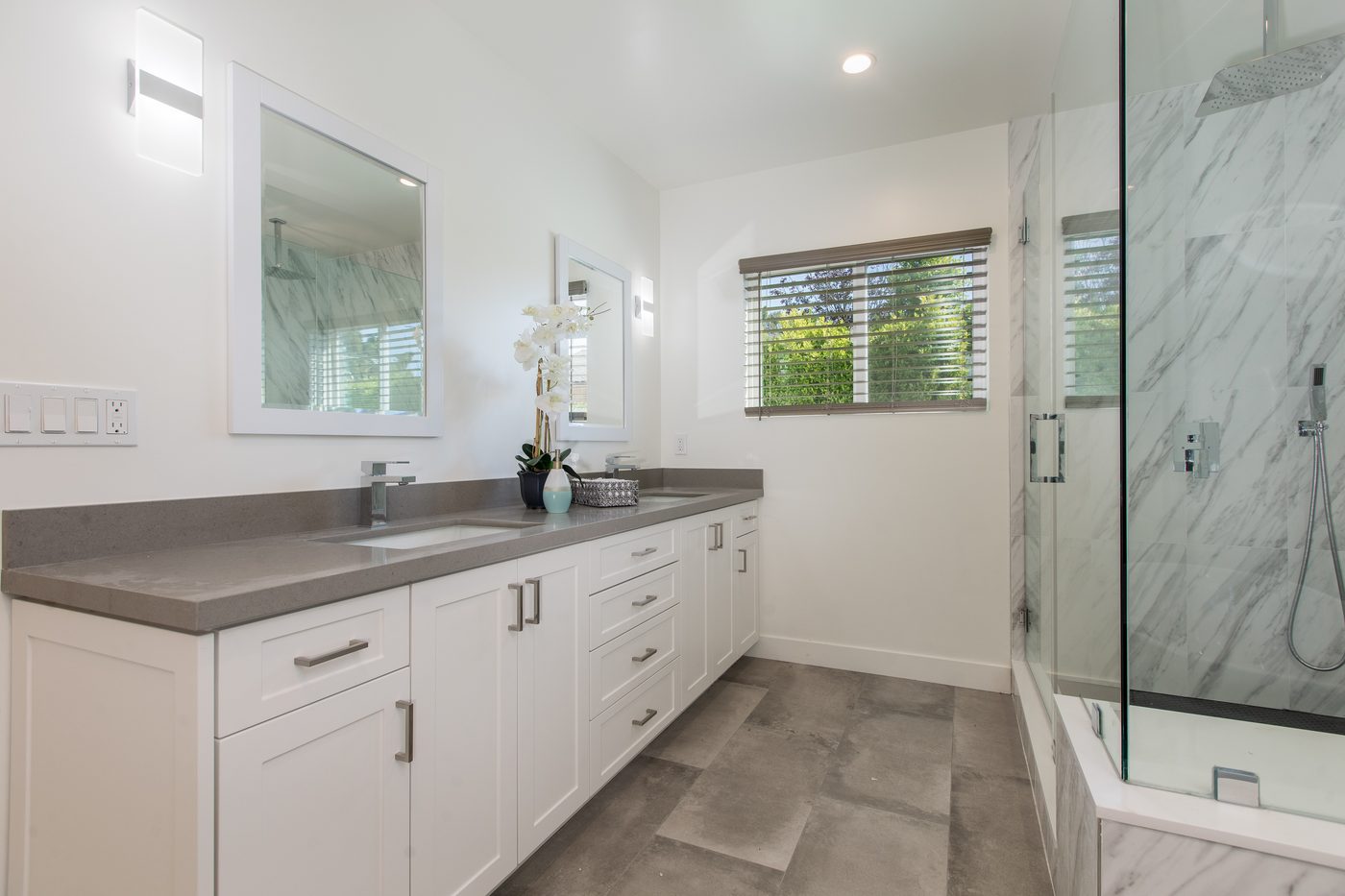
Frameless construction in a bathroom vanity gives you better drawer access, cleaner lines around undermount sinks, and a more contemporary silhouette than most face-frame vanity options. In primary bath remodels in Tarzana, West Hills, and Northridge, we regularly build floating frameless vanities that are designed to look like furniture rather than stock product.
Frameless Built-In or Entertainment Center
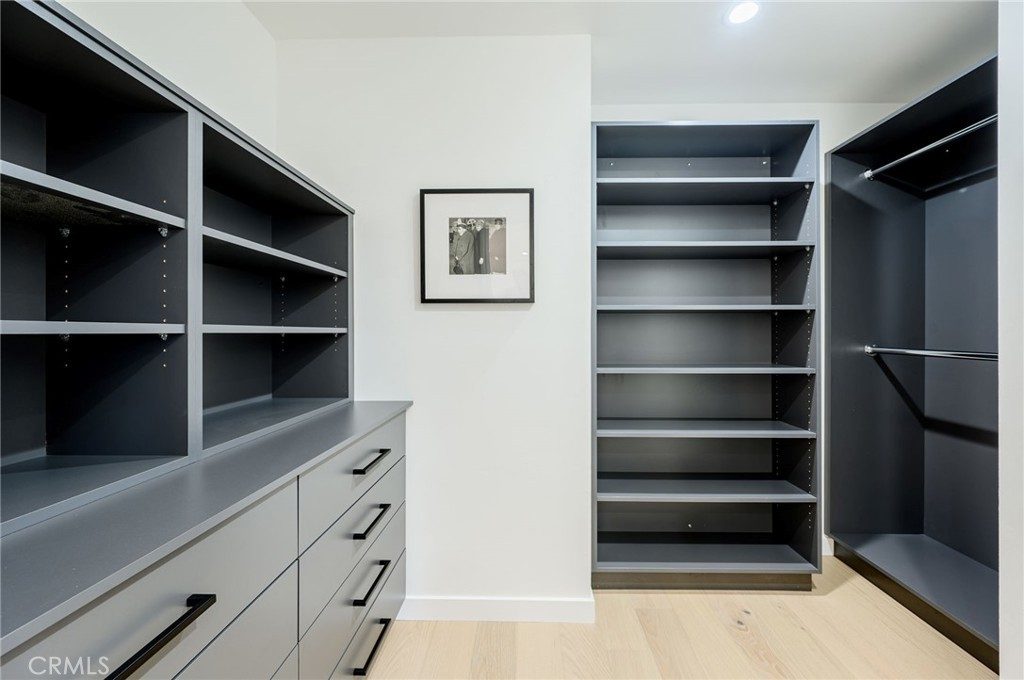
The frameless system applies well beyond the kitchen. A built-in bookcase, an entertainment wall, or a home office surround built frameless has a precision to it that face-frame millwork rarely matches. The reveals stay consistent even across a twelve-foot wall, and the result looks more like a designed element than a collection of furniture.
Is Frameless the Right Fit for Your LA Remodel?
Frameless cabinetry is the right call for most contemporary and transitional remodels where the design intent is a clean, modern surface. It is particularly well-suited for kitchens with large openings where full access to the interior matters, and for spaces where the cabinetry is a primary visual element rather than a background element.
Face-frame construction still makes sense in traditional or farmhouse-style kitchens where the frame is part of the aesthetic, and in certain applications where a specific type of door or decorative detail requires it. We are not advocates for one system over the other on principle. We are advocates for getting the right system for your specific project. When you come in for a consultation, we will look at your drawings, your inspiration images, and your program, and we will tell you directly which way the build should go.
FAQ
Are frameless cabinets stronger than face-frame?
Both systems are structurally sound when built correctly. Frameless cabinets rely on thicker cabinet box panels, typically three-quarter inch or more, to provide the rigidity that a face frame would otherwise supply. Properly built frameless cabinetry is every bit as durable as face-frame construction and in some cases more dimensionally stable because the box does not have a secondary frame element that can move independently.
Do frameless cabinets cost more?
In a full custom context, the cost difference between frameless and face-frame is less significant than most homeowners expect. The material cost is similar. The labor difference comes down to the precision required in frameless installation, particularly around reveals and hardware alignment. For the level of project most of our clients are running, the budget difference is not the deciding factor. The right look for the space is.
What hardware do you use, and is it serviceable long-term?
We use Blum soft-close hinges as our standard on frameless builds. Drawer glides are spec’d per project based on the load, depth, and application. All hardware is adjustable, which means a cabinetmaker can fine-tune alignment years down the line without replacing anything.
How long does a custom frameless kitchen take from order to install?
From signed scope to installation start, a standard custom kitchen runs approximately 4 to 6 weeks depending on material lead times and project complexity. We walk through the full timeline during your design consultation so there are no surprises once production begins.
Do you serve my area?
ATA Custom Cabinets is based in Canoga Park and serves homeowners, designers, and contractors throughout the greater Los Angeles area. We regularly work on projects in Tarzana, Woodland Hills, Encino, Sherman Oaks, Studio City, Calabasas, West Hills, Chatsworth, Northridge, and Hidden Hills, as well as on the Westside in Beverly Hills, Bel Air, Brentwood, Pacific Palisades, and Malibu. If you are in Los Angeles County and working on a full custom project, reach out and we will confirm coverage.
Ready to See What Frameless Looks Like in Your Home?
Visit our portfolio at atacabinets.com to browse completed frameless kitchens, vanities, and built-ins. When you are ready to talk through your project, call us at (818) 346-2030 or stop by our Canoga Park showroom at 21402 Wyandotte St. We work by appointment for design consultations.