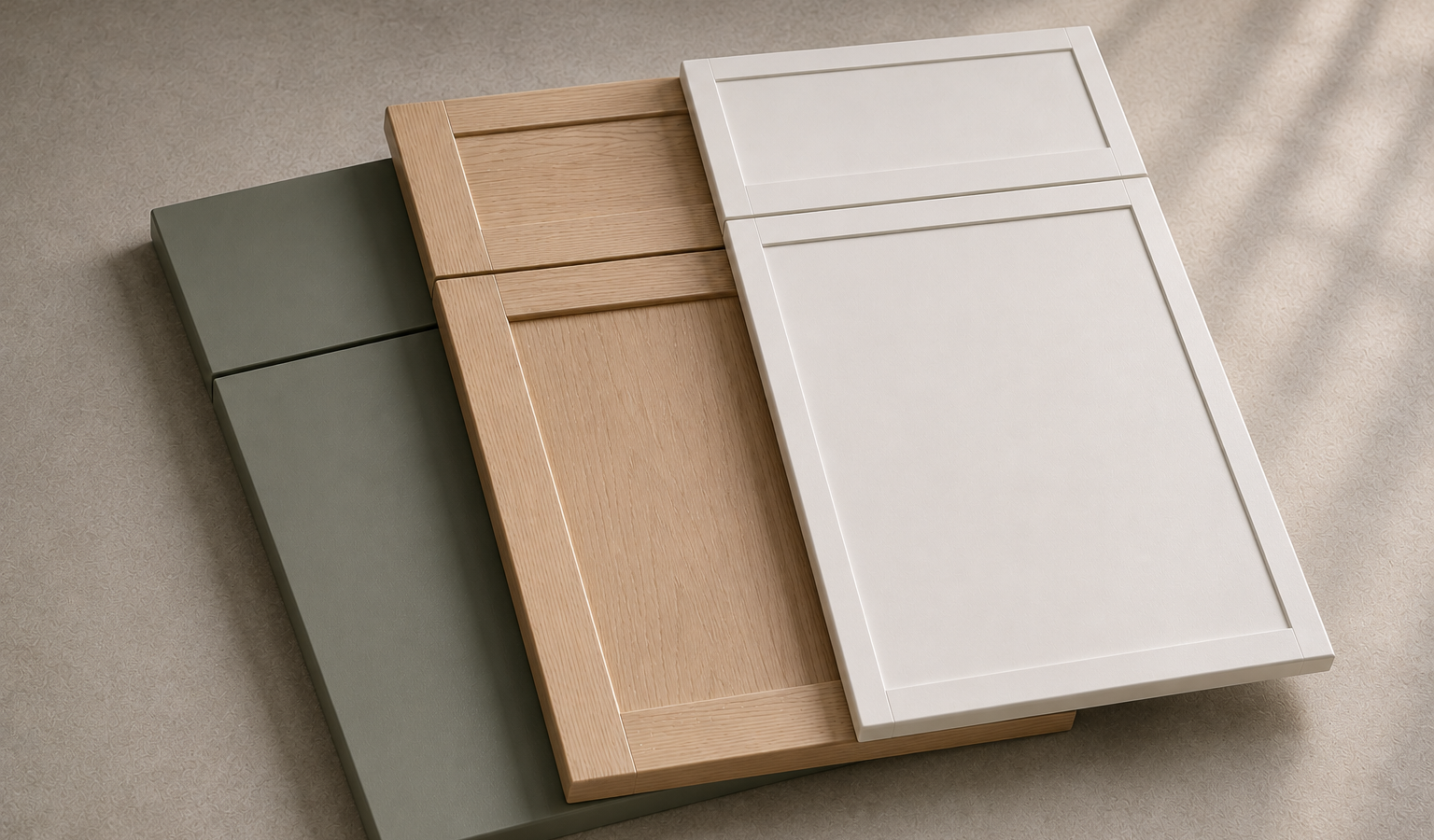
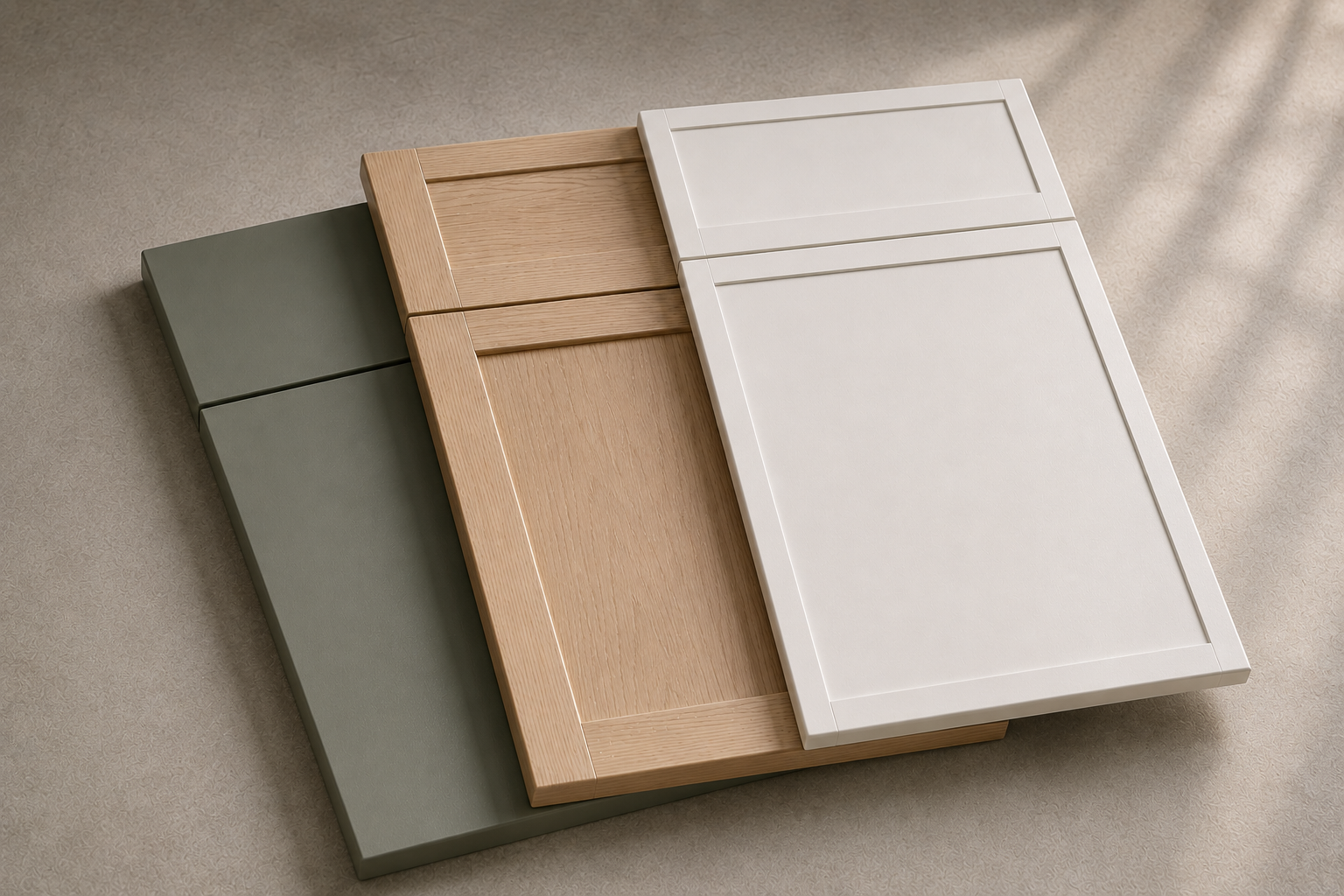
The door is the part of a cabinet everyone sees and touches. It sets the entire personality of a kitchen or a built-in before anyone notices the wood, the hardware, or the finish. For most custom projects in Los Angeles, the decision comes down to three door styles: slab, shaker, and slim shaker. They are the three we build most often, and each one sends the room in a different direction.
At ATA Custom Cabinets, every door is made to order and CNC-manufactured in-house, so the style is not a fixed catalog choice you adapt to. It is something we build to your exact specification. Here is how the three compare, and how to think through which one fits your home.
Why the Door Style Matters More Than People Expect
Two kitchens can share the same wood, the same color, and the same layout and still feel completely different because of the door. The door profile controls how much shadow and detail the cabinetry carries, how traditional or modern the room reads, and even how the space feels to clean and live in day to day.
Because we manufacture in-house on CNC equipment, the door profile is cut precisely and repeats cleanly across an entire run, whether that is a galley of uppers in Encino or a full entertaining kitchen in Calabasas. That consistency is part of what separates full custom cabinetry from stock, and it is most visible right at the door.
Slab Doors: Clean, Modern, and Quiet
A slab door is a single flat panel with no frame and no detailing. It is the most minimal of the three, and it is the backbone of contemporary and European-influenced design.
Slab doors let the material do the talking. On white oak or walnut, the grain runs uninterrupted across the face, which is why slab is the go-to for projects that want to show off wood. In a painted or high-performance finish, a slab door reads as a smooth, seamless plane, the look behind most modern Los Angeles kitchens and frameless cabinetry.
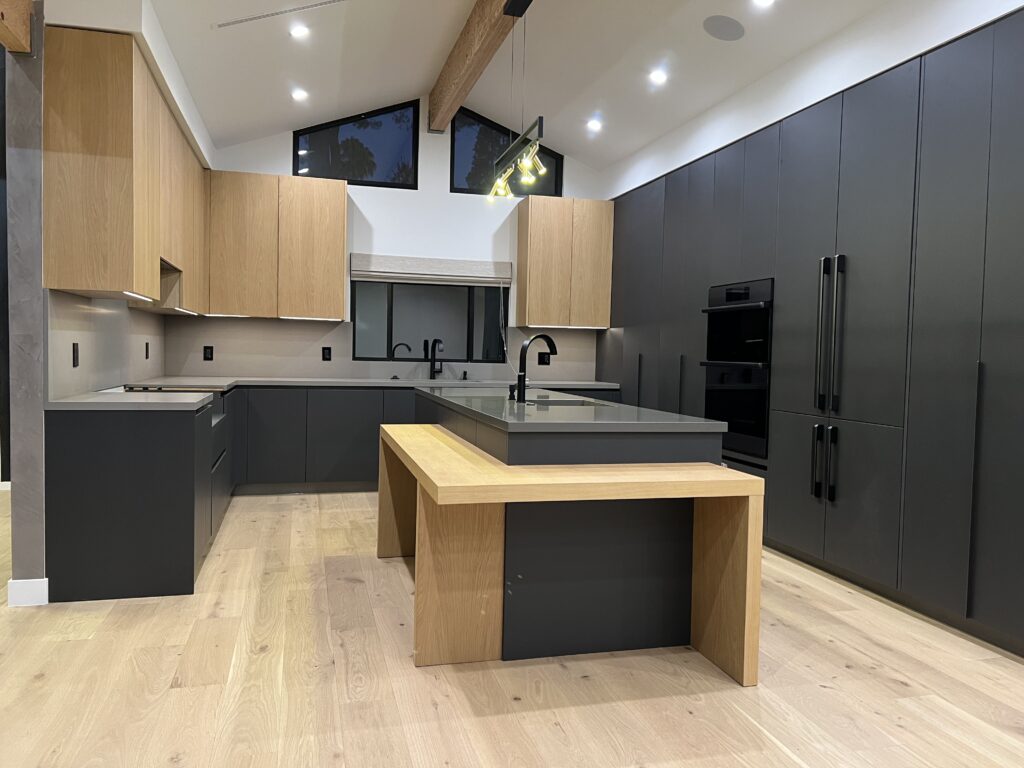
Slab doors are also the easiest to clean, since there are no profiles or corners to collect dust. They suit homeowners who want a calm, current, architectural feel, and they pair naturally with handleless or integrated-pull hardware for a truly seamless front. We see slab requested most often in newer builds and modern remodels across Sherman Oaks, Studio City, and the hillside homes of Bel Air and Brentwood.
Shaker Doors: The Timeless Standard
The shaker door is a five-piece door with a recessed flat center panel framed by four square-edged rails and stiles. It is the most recognized cabinet door in American homes for a reason: it works almost everywhere.
Shaker carries just enough detail to feel crafted without committing to a period style. It sits comfortably in traditional, transitional, and even some modern interiors, and it takes paint beautifully, which is why it is the default for a crisp painted kitchen. The defined frame creates a soft shadow line that gives the cabinetry depth and substance.
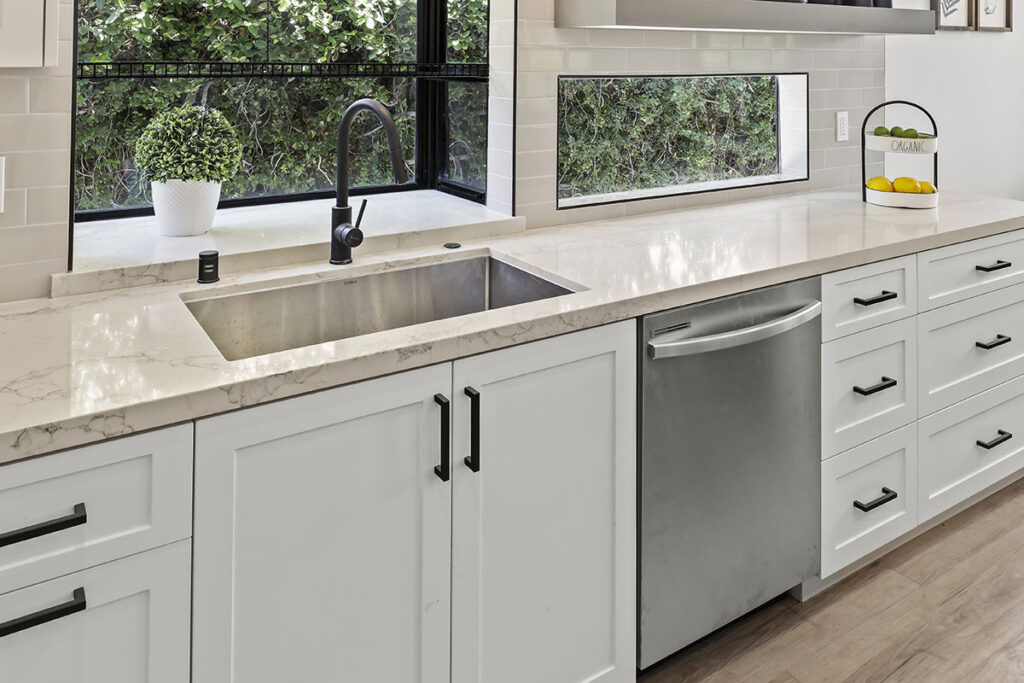
The trade-off is maintenance. That recessed panel and the inside corners of the frame collect a little more dust and need slightly more attention than a flat door. For most homeowners that is a fair exchange for a look that will not feel dated in ten years. Shaker remains the most requested style for classic and transitional homes throughout Tarzana, Woodland Hills, and Northridge.
Slim Shaker: The Modern Middle Ground
The slim shaker is exactly what it sounds like: a shaker door with a much narrower frame. By tightening the rails and stiles, the door keeps the crafted shadow line of a traditional shaker but reads far more contemporary and refined.
This style has become a favorite for transitional and modern homes that want a little detail without the weight of a full shaker frame. The narrow profile feels current and tailored, and it bridges the gap for homeowners who find slab too plain but full shaker too traditional. It is a strong choice when a designer wants the cabinetry to feel custom and considered rather than off the shelf.
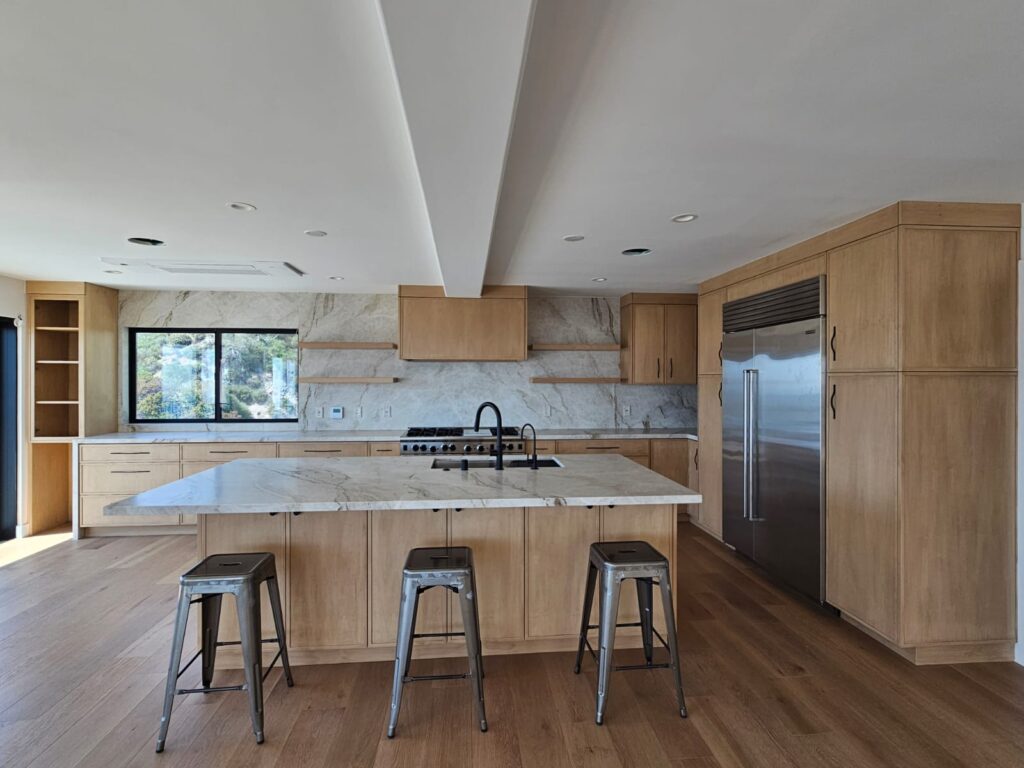
Slim shaker pairs especially well with white oak and with clean painted finishes, and it suits the elevated, design-forward projects we take on in Calabasas, Hidden Hills, Pacific Palisades, and Malibu.
How to Choose Between the Three
The right door comes down to the feeling you want and the way you live. A few ways we guide clients:
Choose slab if your home is modern or European in feel, if you want the wood grain or a seamless painted plane to be the star, and if low-maintenance, handleless cabinetry appeals to you.
Choose shaker if you want a timeless look that suits a traditional or transitional home, if you love a crisp painted kitchen, and if a little extra cleaning is worth a style that ages well.
Choose slim shaker if you want something that feels current and tailored, a middle path between the minimalism of slab and the tradition of shaker, with just enough shadow line to feel custom.
Because everything is built to order, you are not limited to one style across a whole home either. Many projects use slab on a modern kitchen and a slim shaker on a nearby built-in, or carry one style throughout for a cohesive look. We help match the door to the room and to the wood species and finish so the whole project feels intentional.
Door Style, Wood, and Finish Work Together
A door style is only part of the equation. The same slim shaker looks warm and organic in white oak, rich and dramatic in walnut, and crisp and architectural in a painted finish. Slab doors can be built in solid wood or in durable surface materials from makers like Egger, Shinoki, Treefrog, Fenix, Miralux, and Wilsonart for high-traffic spaces.
When we scope a project, we look at the door style, the species, the finish, and the hardware together so they reinforce one another rather than compete. That coordination, handled in-house from drawings through manufacturing, is what makes custom cabinetry feel like a single designed piece rather than a set of parts.
Frequently Asked Questions
What is the most popular cabinet door style?
Slab, shaker, and slim shaker are the three styles most custom projects choose between. Shaker remains the most widely loved for its timeless, works-anywhere appeal, while slab leads in modern homes and slim shaker has become the favorite middle ground for design-forward remodels.
What is the difference between shaker and slim shaker?
Both are five-piece doors with a recessed center panel. The difference is the width of the frame. A traditional shaker has a wider rail and stile, while a slim shaker uses a much narrower frame, which makes it read more modern and refined while keeping a crafted shadow line.
Are slab doors harder to keep looking clean?
Slab doors are actually the easiest of the three to clean because they have no frame, profile, or inside corners to collect dust. Shaker and, to a lesser degree, slim shaker have a recessed panel that needs slightly more attention.
Which door style is best for a painted kitchen?
Shaker and slim shaker are both excellent for painted finishes, since the framed panel gives the paint a crisp, defined look. Slab doors also paint beautifully when you want a smooth, seamless modern plane instead of a framed look.
Can I use different door styles in the same home?
Yes. Because every door is built to order, you can run one style throughout for a cohesive feel or mix styles by room, such as slab in a modern kitchen and slim shaker on a built-in. We help coordinate the choices so the home still feels unified.
Find the Right Door for Your Project
Slab, shaker, and slim shaker each take a kitchen or built-in somewhere different, and the best way to decide is to see them in your own materials and light. The right door, matched to the right wood and finish, is what makes custom cabinetry feel built for your home rather than chosen from a shelf.
See these door styles in completed projects in our portfolio at atacabinets.com.
Call us at (818) 346-2030 to talk through the right door style for your kitchen, bath, or built-ins.